Table of Content
The quick answer, if that's all you're looking for, is that the average U.S. household uses 893 kWh per month. Even large appliances such as coffee machines, printers, laptops, Xbox consoles, and even toasters and hair dryers may be powered by a 1000w power inverter. Inverters between 756 and 1000 watts are ideal for residential use.
The average electric bill in the United States is $117.65 per month, according to recent data from the U.S. The average American household uses about 914 kWh a month, which works out as a little over 30 kWh a day. So, you can expect a 1-2 bedroom apartment to be anywhere between kWh a day. Ofgem estimates the typical household in Britain uses 2,900 kWh of electricity and 12,000 kWh of gas in a year. According to Ofgem publications, a house in the UK consumes 242 kWh of electricity and 1,000 kWh of gas per month. When it comes to average gas consumption, the figures are a little higher.
Does unplugging appliances save energy?
If you use window ACs for larger living spaces and on a 24-hour basis, your consumption will be far higher. Larger window ACs also have a higher power draw, as do those that aren’t Energy Star-rated. Dryers that aren’t Energy Star-rated can be a much larger drain on resources, sometimes consuming more than double the average amount of energy. Your overall consumption will also be higher if you do more than three loads of laundry per week or if you use options like “wrinkle prevent” that keep cycling your dryer on. Program covers your heating, cooling, and electrical systems. When a breakdown occurs, rather than paying hundreds or even thousands of dollars on repairs, Agway customers call us.
Homes with more people tend to have higher consumption rates because the fridge gets opened many more times per day and has to work harder to remain cool. Warmer climates in which your indoor space is hot or humid will also increase this consumption rate. This assumes the TV is on for an average of four hours per day — which is standard in America — and that the TV is a moderately sized (40” to 56”) HD LED model. About 914 kWh a month, or 30 kWh a day, is what the typical American family consumes. As a result, you may anticipate a one- or two-bedroom apartment to use anything from 20 to 30 kWh of electricity daily. In today’s world, electricity and the internet are necessary to live and work.
Also in Energy and the environment explained
A household with low consumption will probably get through around 8,000 kWh per year, while a high consumption household could use up to 17,000 kWh per year. Hi Poed, it’s basically what we consider 1 unit of electricity. It is equal to the electricity used by a 1000W device running for 1 hour. This is usually sufficient cooling power to cool spaces up to about 1,200 sq ft.

I could not afford to take him to court and could not get any help from anyone, not even CAB. I’m desperate for someone to help me sort these problems out! I am thinking that the flats that are joined to our block may be the problem. This is really affecting my mental health, as I do not get anywhere when raising it with the electricity companies I have used.
Also in Units and calculators explained
This amount of electricity also assumes you use your fan 24 hours a day, seven days a week, which won’t necessarily be the case in all parts of the country. If you live in the southern states and are comfortable relying on just a ceiling fan, this number could be accurate. Lastly, the size of the ceiling fan matters, with larger fans consuming slightly more energy per hour running than smaller ones.
Running a 1-ton central air or mini-split air conditioner will use anywhere between 0.48 kWh and 0.86 kWh per hour . The average home in the United States uses about 900 kilowatt hours per month . In the United States, a 5 kWh system is expected to produce 7,161 kWh annually. There are many additional ways to conserve energy and reduce your monthly electric bills, but the above tips should get you started in the right direction.
How Much Electricity (kWh) Do Air Conditioners Use? (Calc + Chart)
Suppose you go back to the formula of total power generated by solar panels. In that case, you will see that the power rating of a solar panel is an important consideration in determining the total amount of power generated over some time. Find the monthly operating cost by multiplying your daily cost by 30. At the California average electricity price, a 300-watt unit costs $16.20 per month, or $194.40 per year. Refrigerators with a lower wattage rating will require much less energy, and thus cost much less to operate. The table below shows the average energy consumption of common household appliances and how much they add to your household energy bills.

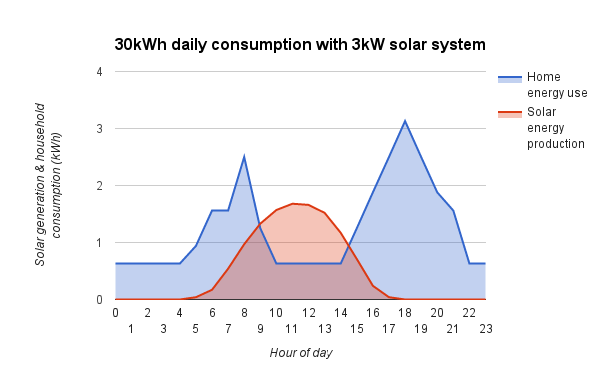
But your home’s energy requirements may be substantially different from those of the typical American family. Nonetheless, this is based on the national average which is calculated in a 24-hour period – assuming that appliances are being used throughout that time period. Subsequently, if we divide 30,000 by the number of hours in a day that means it takes around 1250 watts per hour to power a home. That averages out at 900,000 watts of which your appliances could be drawing out each month.
1 kWh would be used to run a 1000-watt appliance for an hour . Or on a smaller scale, a 100-watt lightbulb would run for 10 hours using 1 kWh. The easiest way to work out how many kilowatt-hours per day you’re using is to check your smart meter, if you have one. The average residential cost of electricity in British Columbia is $0.126 per kWh, or $126 per month, assuming an average monthly usage of 1,000 kWh. This is up from $0.124 per kWh, or $124 per month in 2020. We used the tiered residential rates from BC Hydro and Fortis BC to calculate prices in BC.

Even things like electricity habits — like leaving lights on — and home age can affect energy consumption and energy efficiency. You can check your past energy bills to see how much electricity you consume throughout the year. An average central ac will use 3000 to 5000 watts of power for around 9 hours a day during the hotter months. Click calculate to find the energy consumption of a central air conditioner using 3500 Watts for 3 hours a day @ $0.10 per kWh.
The #1 most important thing to know is your home's energy usage. Once you have a rough idea of how many kWh you use, you can shop for electricity plans and see all-inclusive pricing so you won’t get hit with a surprise bill. However, the overall consumption is lower than many other major appliances because dryers are used less frequently. Larger televisions will naturally consume more power than smaller ones, and high-definition TVs and OLED TVs will draw more power than less-advanced models.
If you have a 5-ton central air conditioner or a 5-ton mini-split AC unit you will likely want to know how much electricity it draws. UK household electricity use has been dropping over the last few years1, largely because we have more energy-efficient appliances. Smaller houses, better-insulationand warmer winters also play a role. According to the Department for Business, Energy & Industrial Strategy , the average household uses 3,731 kWh per year2. A kilowatt-hour and a kilowatt may sound like the same thing, but they’re not quite tomato-tomahto. A standard window AC unit will consume around 0.9 kW per hour.


No comments:
Post a Comment